

The Box
Hill House / 6
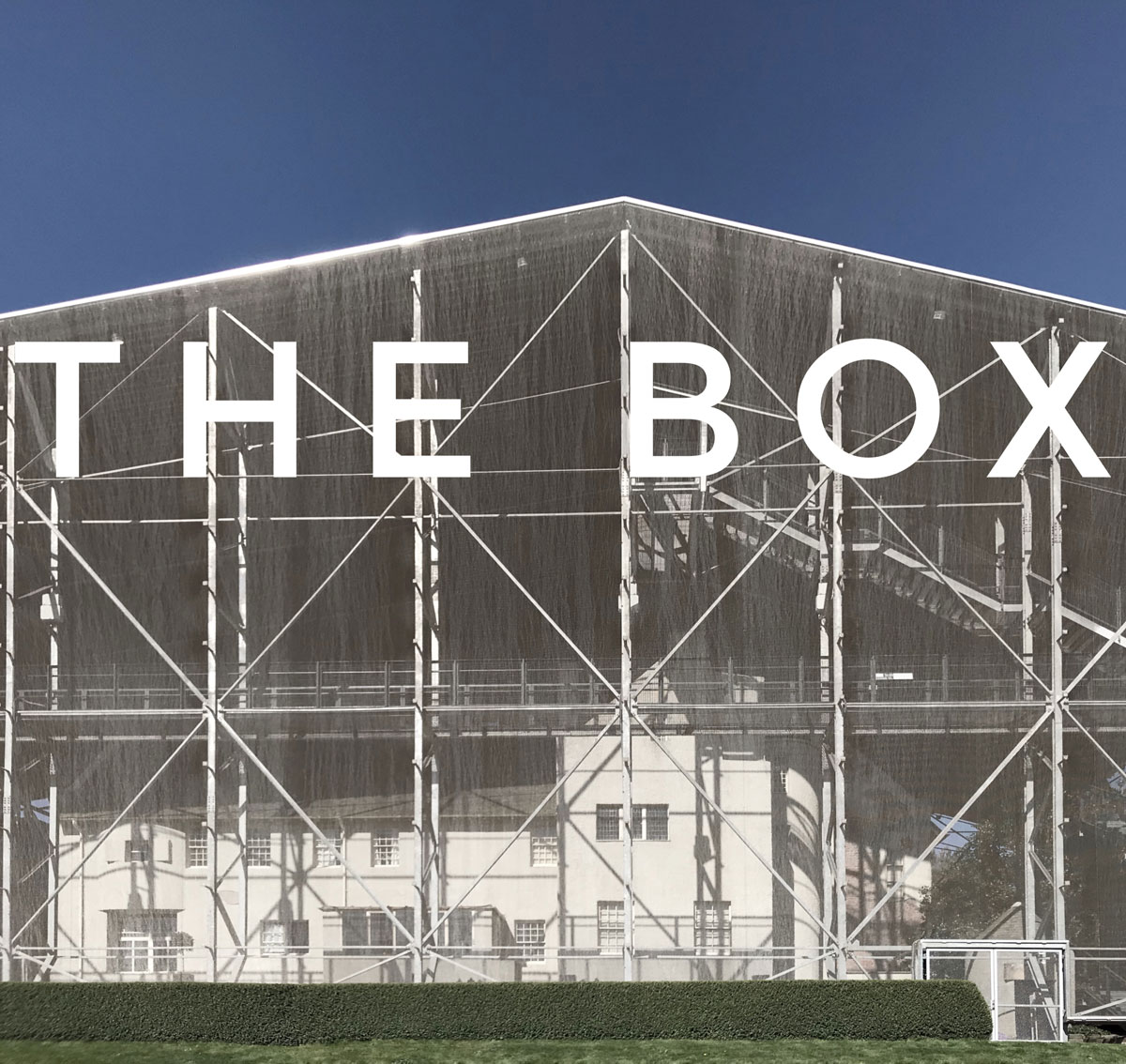
“The box turns it doll’s house. Crossing the walkways you want to open windows and play.”
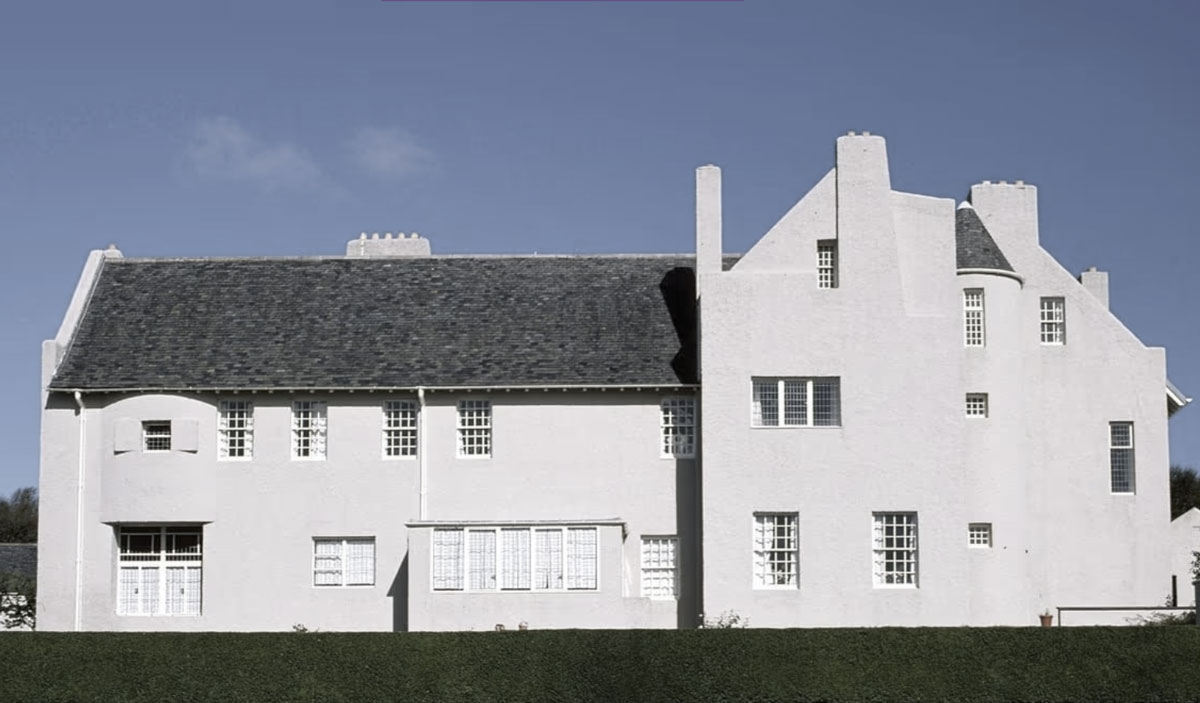
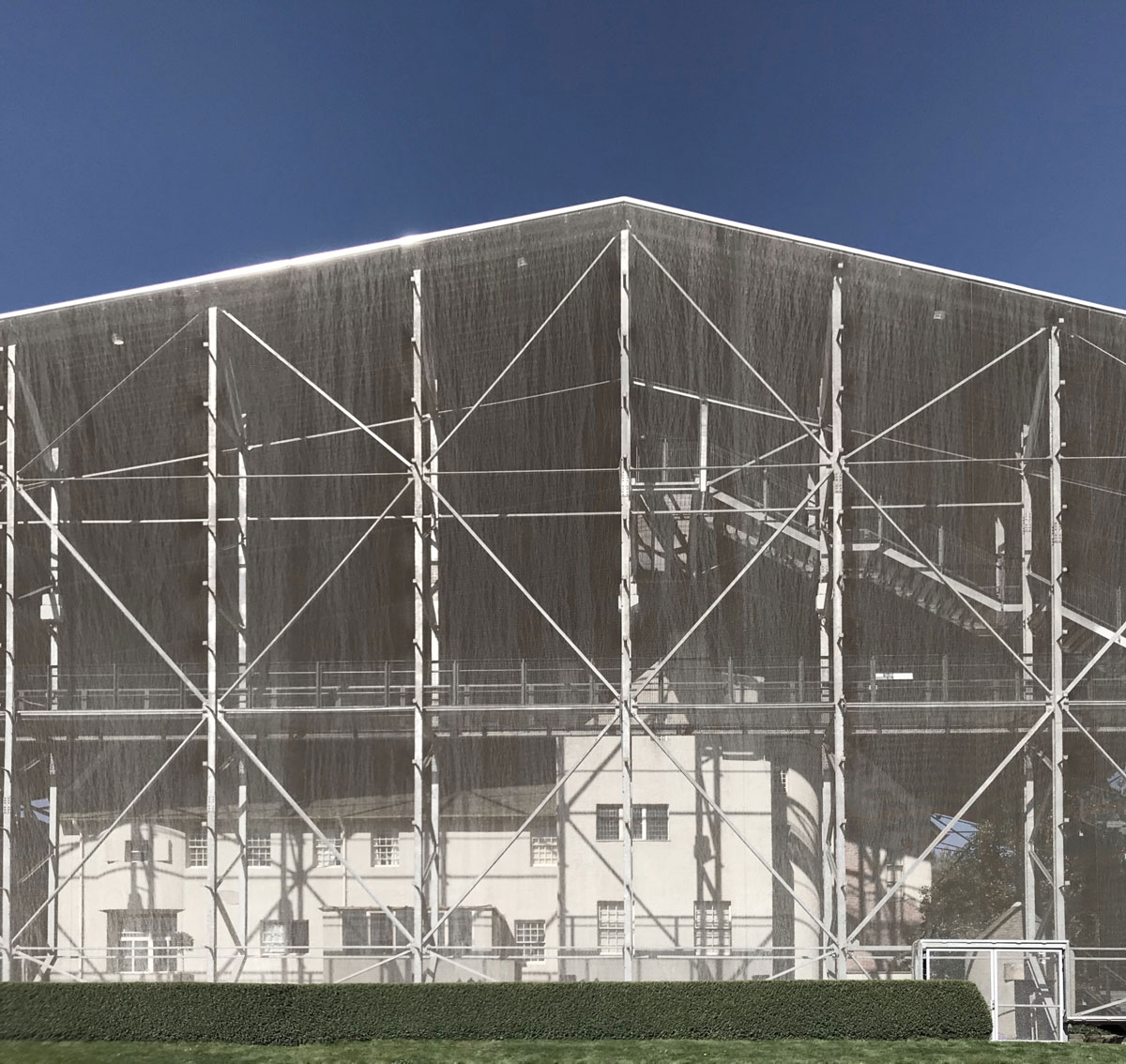
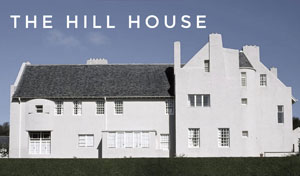
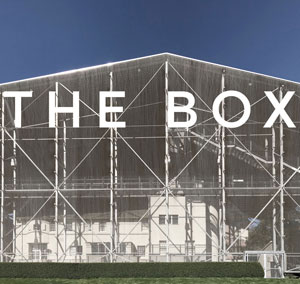
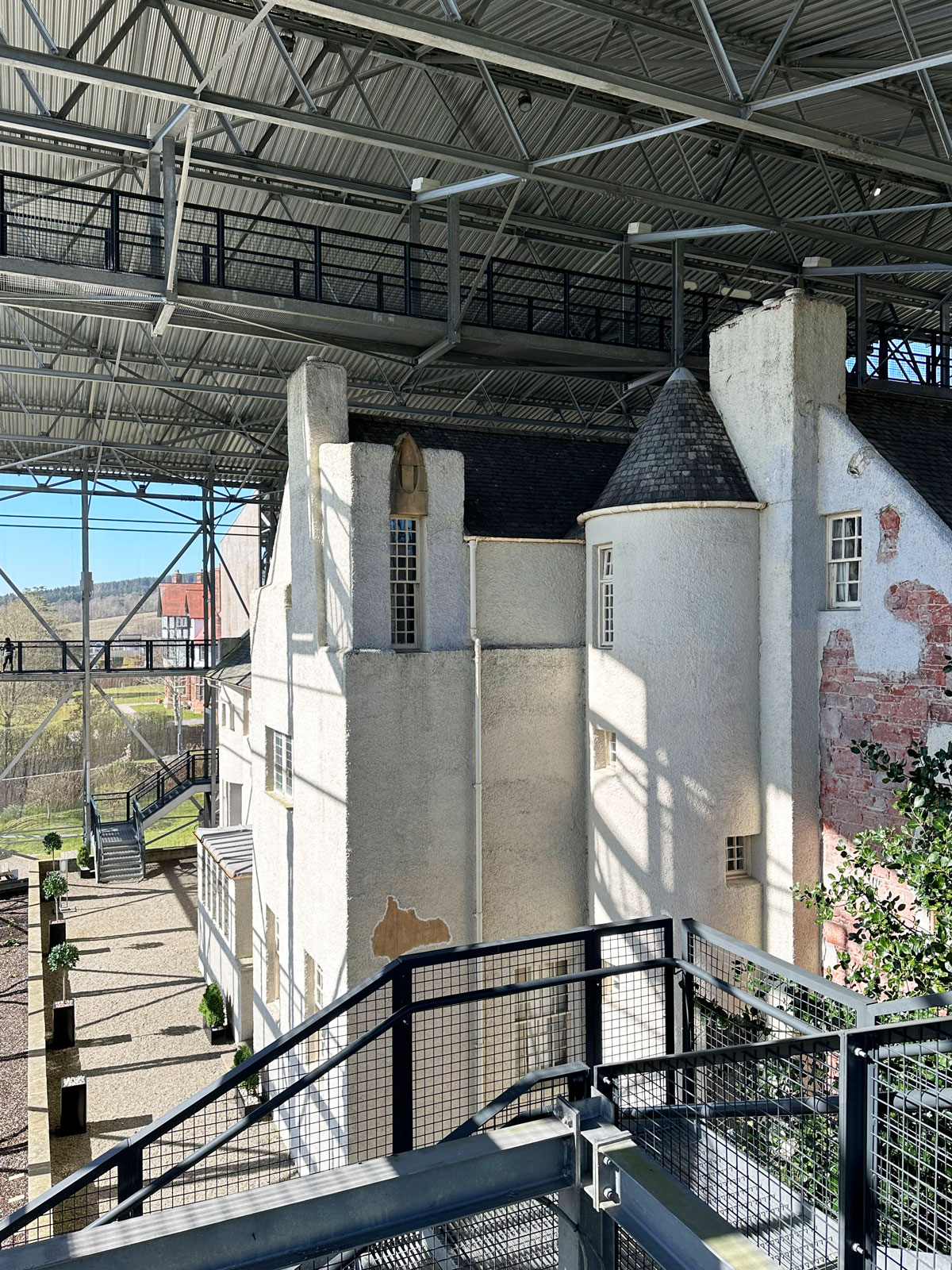
It’s big. It’s bold. It’s a Mac-in-the-box! Hill House has a huge surprise for its visitors, as it’s currently encased in a gigantic chainmail box. It’s an extraordinary sight, especially as it’s landed in such a suburban landscape. The reason for it, to protect the house while it undergoes a major life-saving restoration programme.
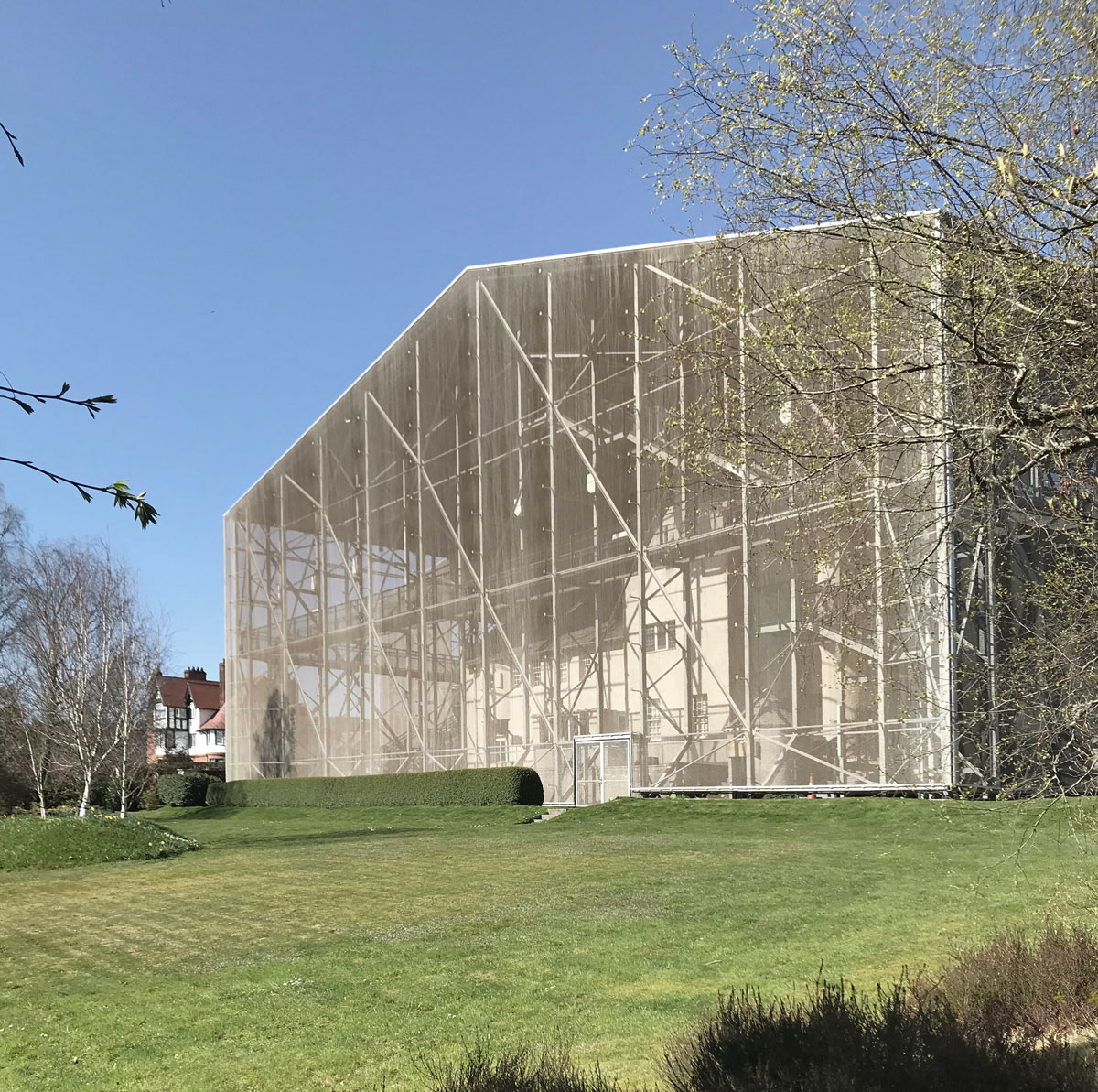
Yet it’s a big plus for the visitor, as the architects of the box have built elevated walkways for the public that traverse all sides and the roof. The box turns it doll’s house. Unreal. Crossing the walkways you want to open windows and play. Zig-zagging, up, down and around the house, it’s as if one has climbed into an Escher drawing of staircase conundrums and distortive perspectives.
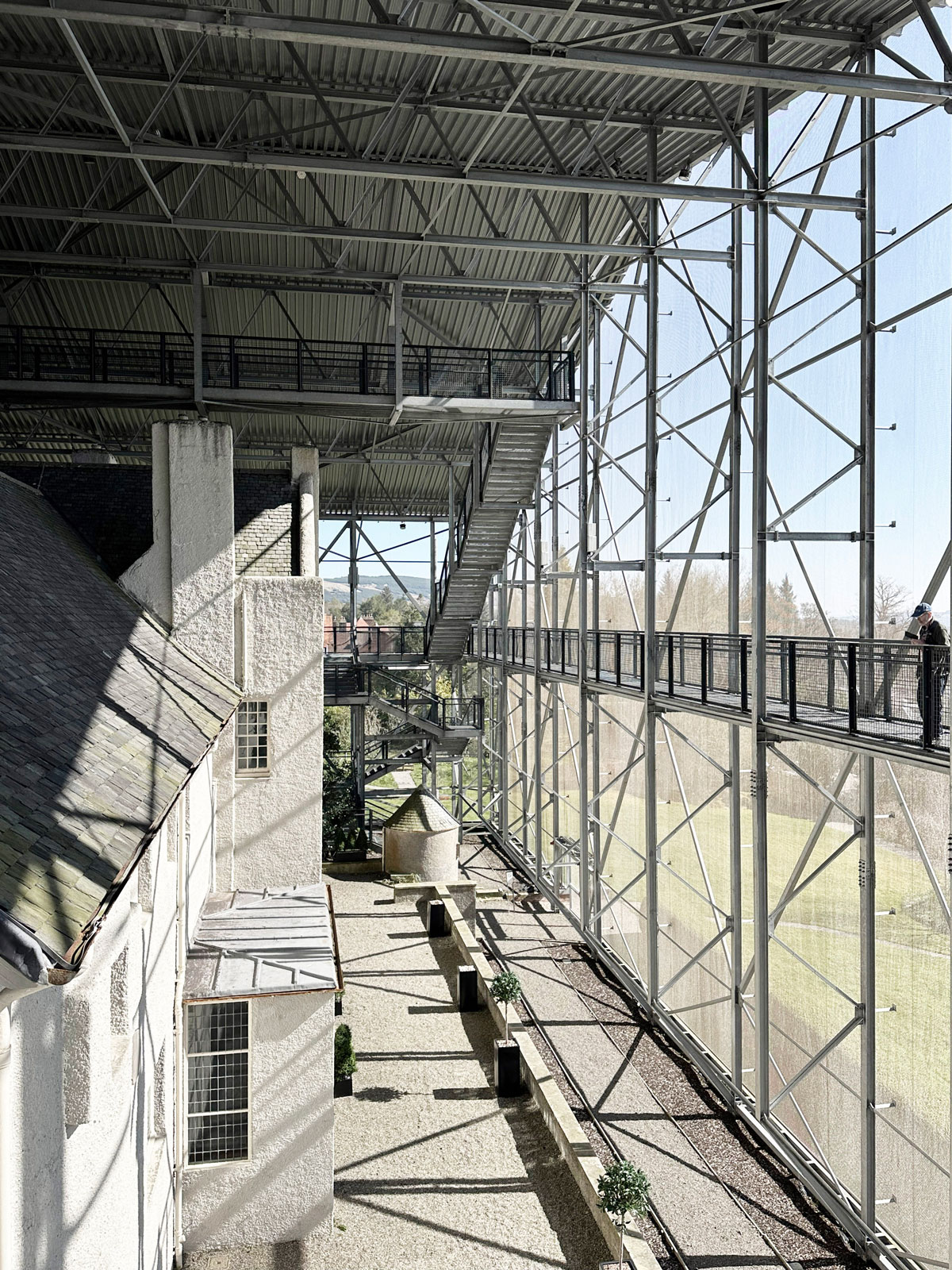
Rather than incarcerate the house away from view whilst the fifteen-year restoration is undertaken, this radical and highly dramatic approach to active conservation has been taken. The big-box, designed by Carmody Groarke architects, is based upon pylon construction techniques, and is draped in a gossamer of fine chainmail. This keeps the weather and the birds out, yet allows insects and bees in, so that garden pollination can continue.
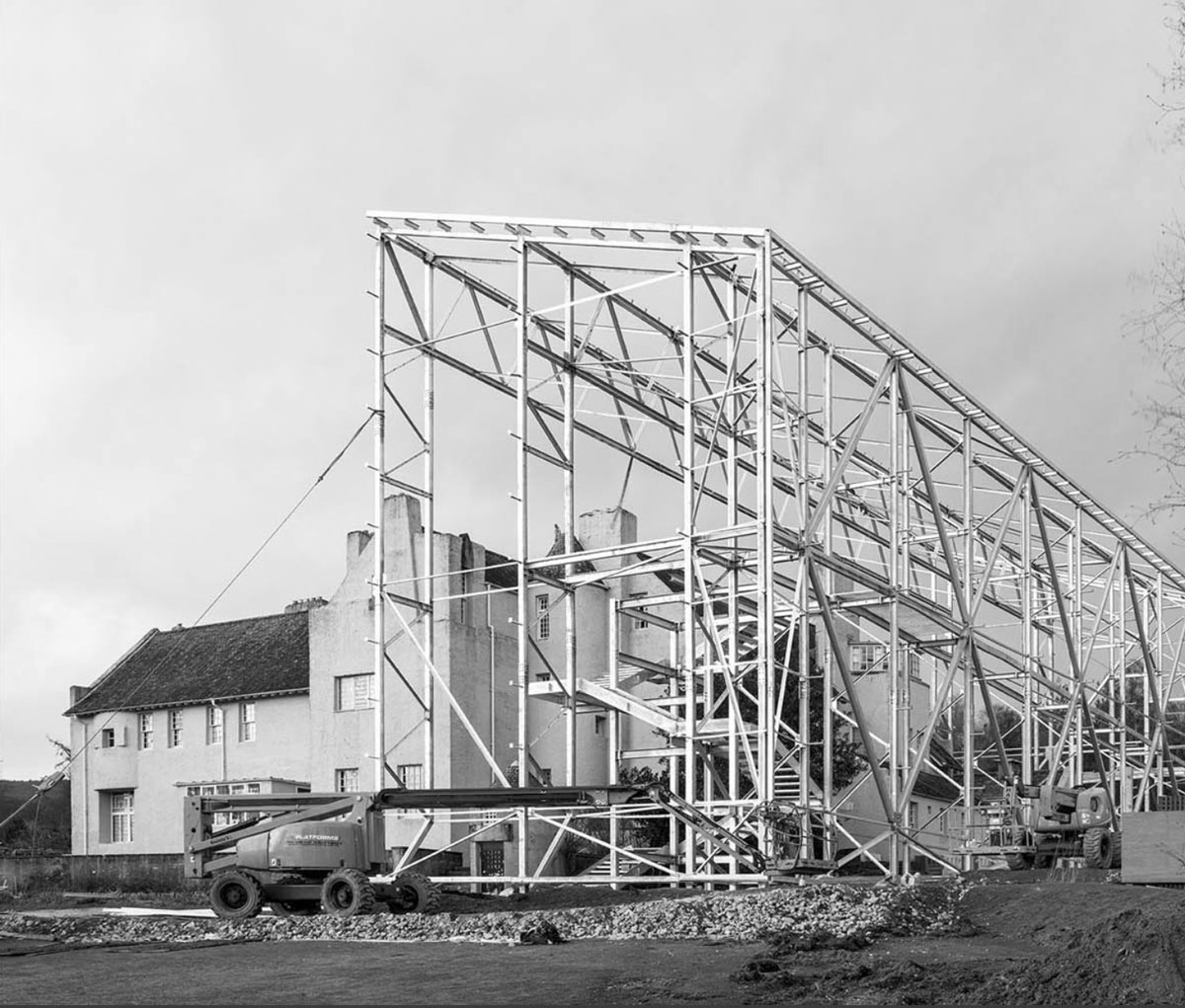
It acts as a ‘field hospital, designed to buy an ailing patient time’ say the architects, and contains and protects the Hill House as an ‘artifact’, yet allows it to breathe, whilst also maintaining access to the house for visitors.
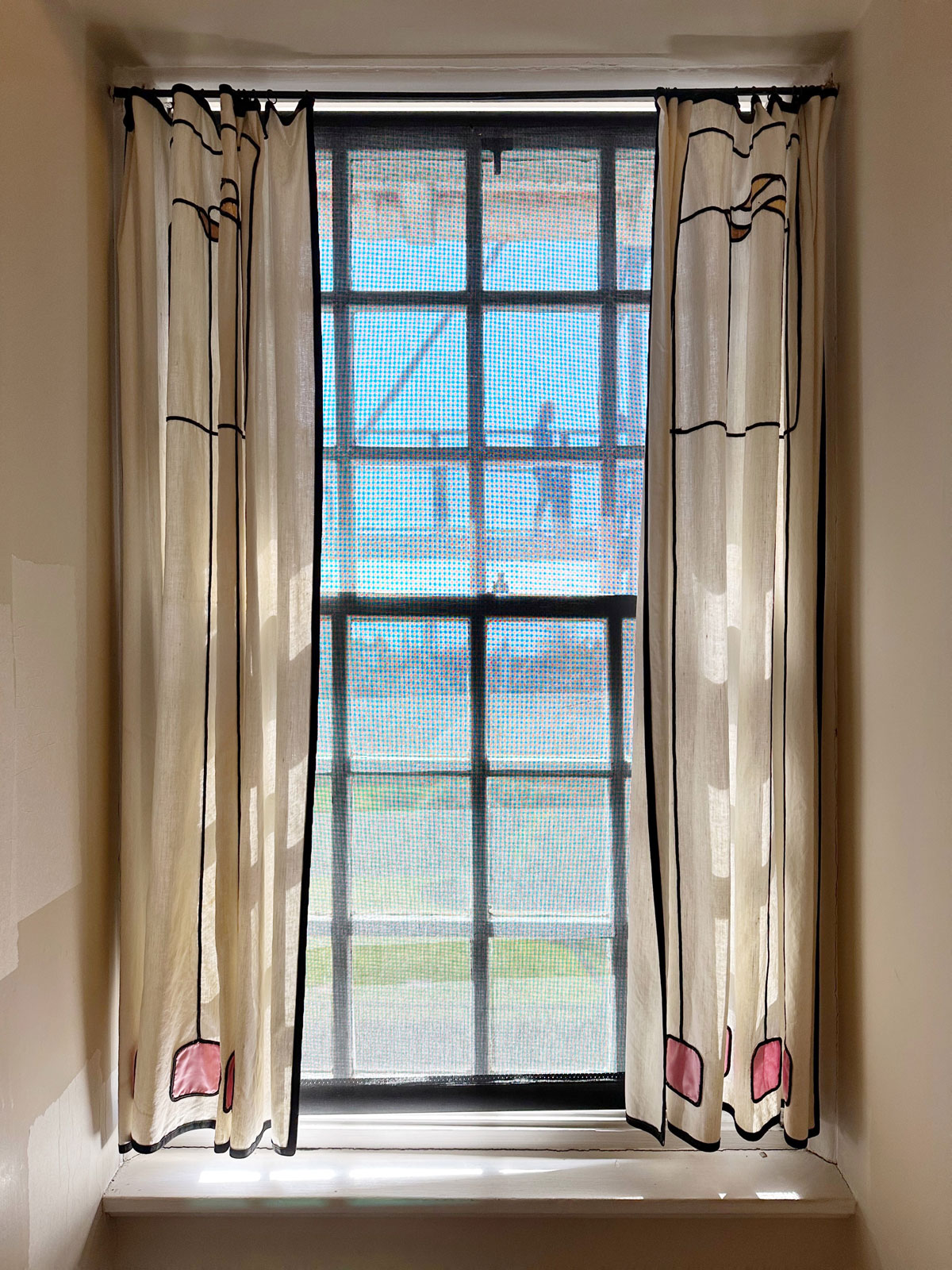
Don’t let this put you off visiting, in fact go now before it’s removed – as you have the benefit from experiencing the architectural details of this magnificent house from all angles, including above – and even get a good look down its chimney pots! The house is open inside as normal to visitors, and the box outside does not affect the experience – so now’s the time to go.
A Fatal Flaw / Words by the National Trust Scotland
“Mackintosh was a revolutionary designer, but the materials and techniques at the cutting edge of architectural design in 1900 haven’t withstood a century of the west of Scotland’s harsh, wet weather conditions.”
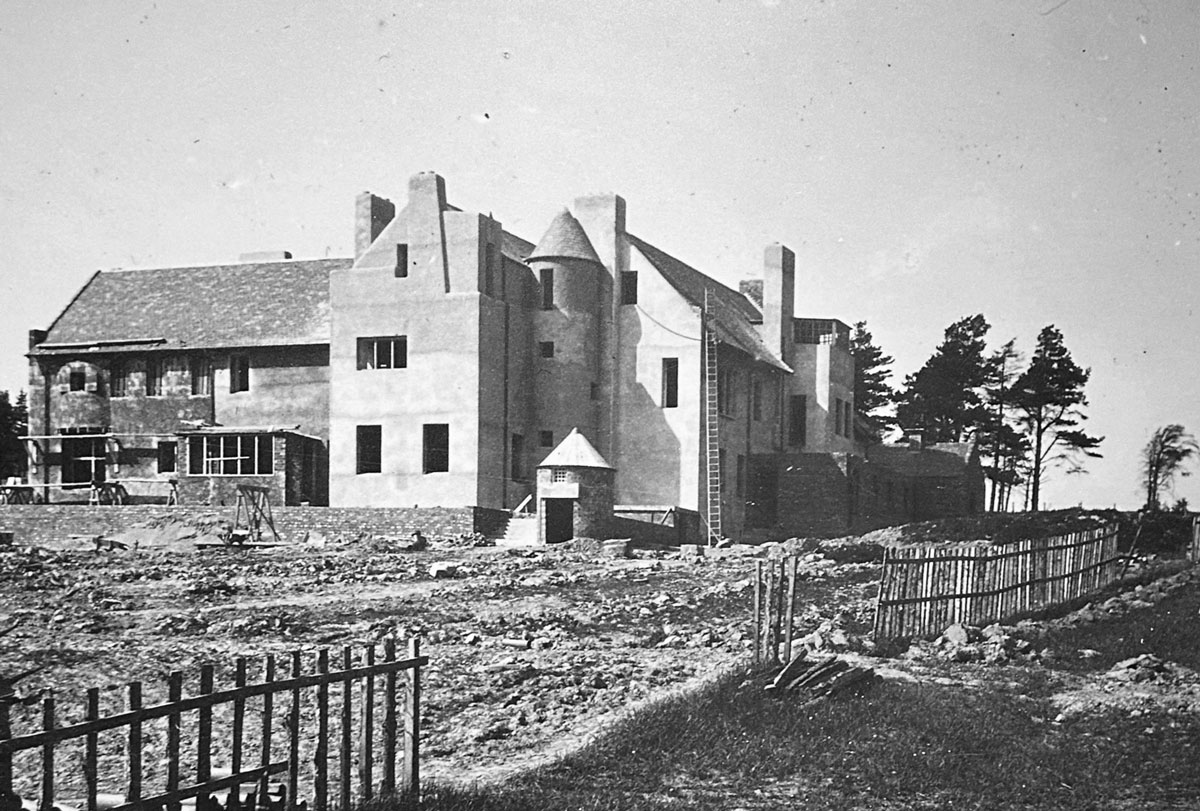
For Mackintosh, cement roughcast must have seemed the perfect finish for the Hill House. It was adaptable to his building design and Walter Blackie, who commissioned the house, liked the way it looked.
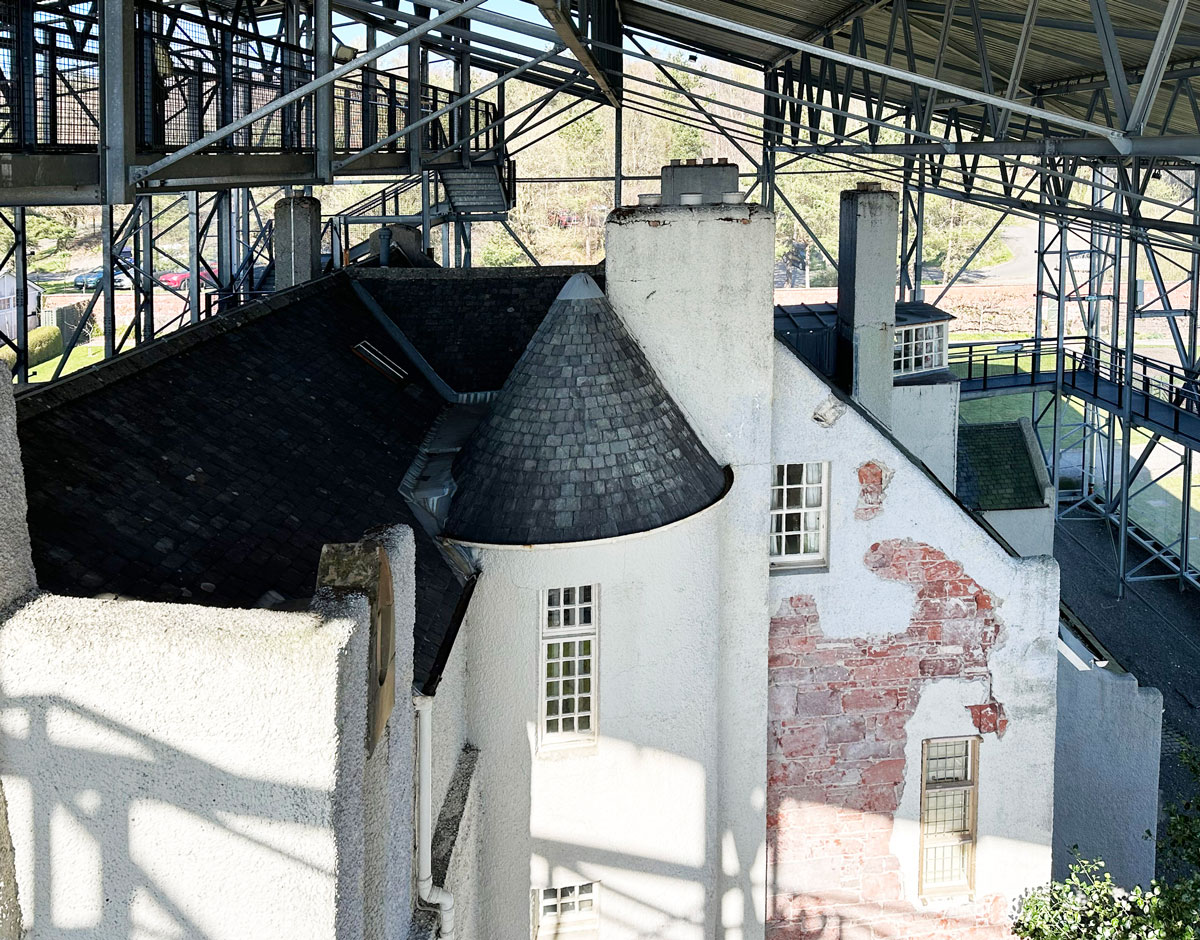
In 1902 cement was still a relatively new building material. Mackintosh would have seen it applied in various forms to contemporary European buildings, and he had experimented with it at the Glasgow School of Art and the Willow Tearooms. It was a surprising choice since roughcast was more traditionally associated with low-class building types, but he was interested in challenging ideas and pushed the boundaries of new materials.
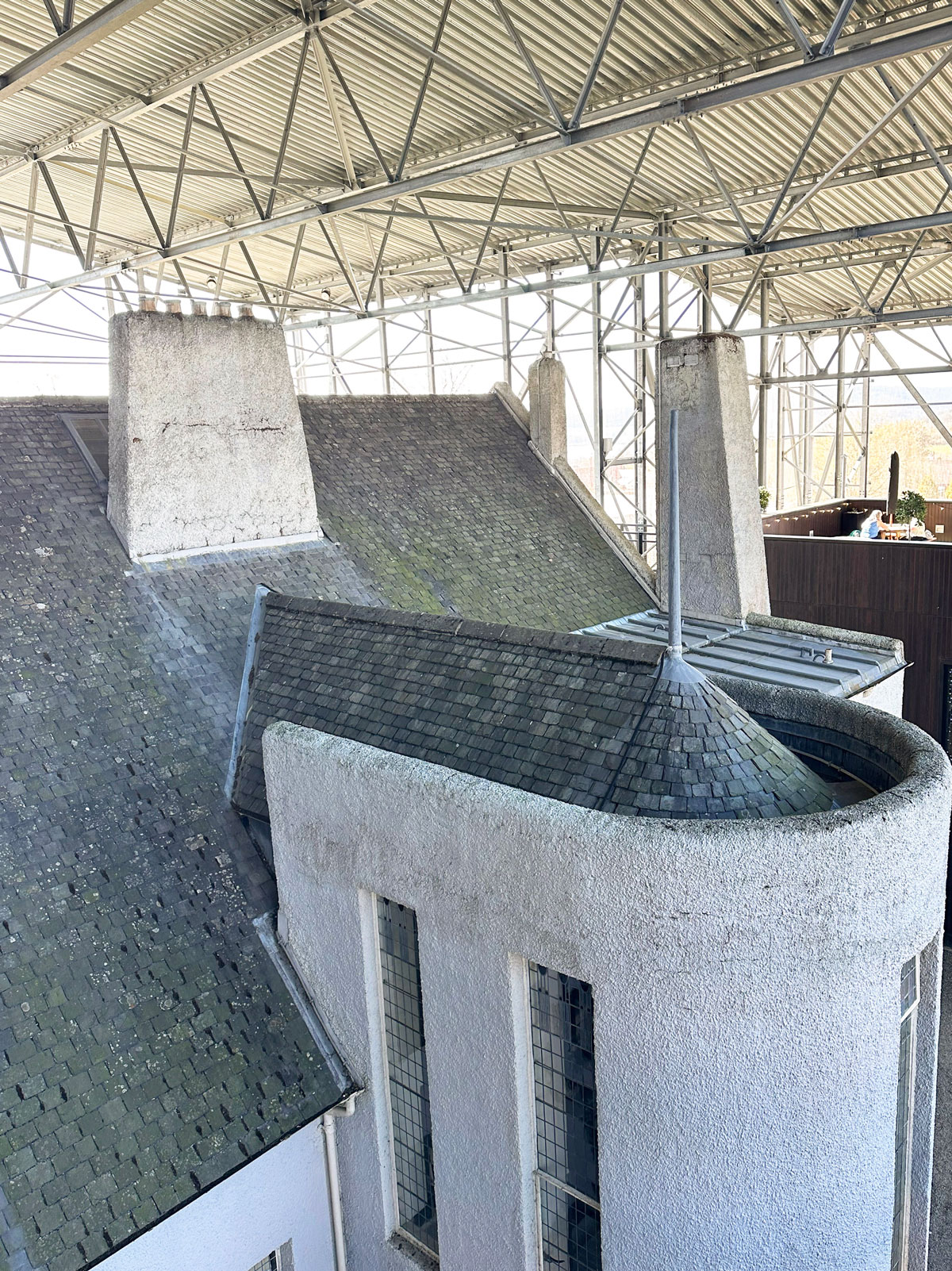
At the Hill House cement roughcast was an ideal way to unite different architectural shapes and was easy to work around curves and into crisp angles. What Mackintosh didn’t fully account for was the effect of the Scottish weather.
Traditional lime roughcast allows a building to breathe. With cement roughcast, if it cracks, rain soaks into the building and cannot evaporate back out. Mackintosh’s modern, yet fatal, choice of material has caused a lifetime of damp and damage to the walls and interiors of the house.”
For more on the Hill House, its rebirth, and today’s recognition of Mackintosh, please do read our further posts by tapping on the icons below. And for the Hill House address and opening times tap here – National Trust For Scotland