

The Furniture
Hill House / 5
“The desk just oozes preciousness and illustrates Mackintosh’s ability to create something so measured and so blissfully exquisite. It’s the epitome of Secessionist design.”
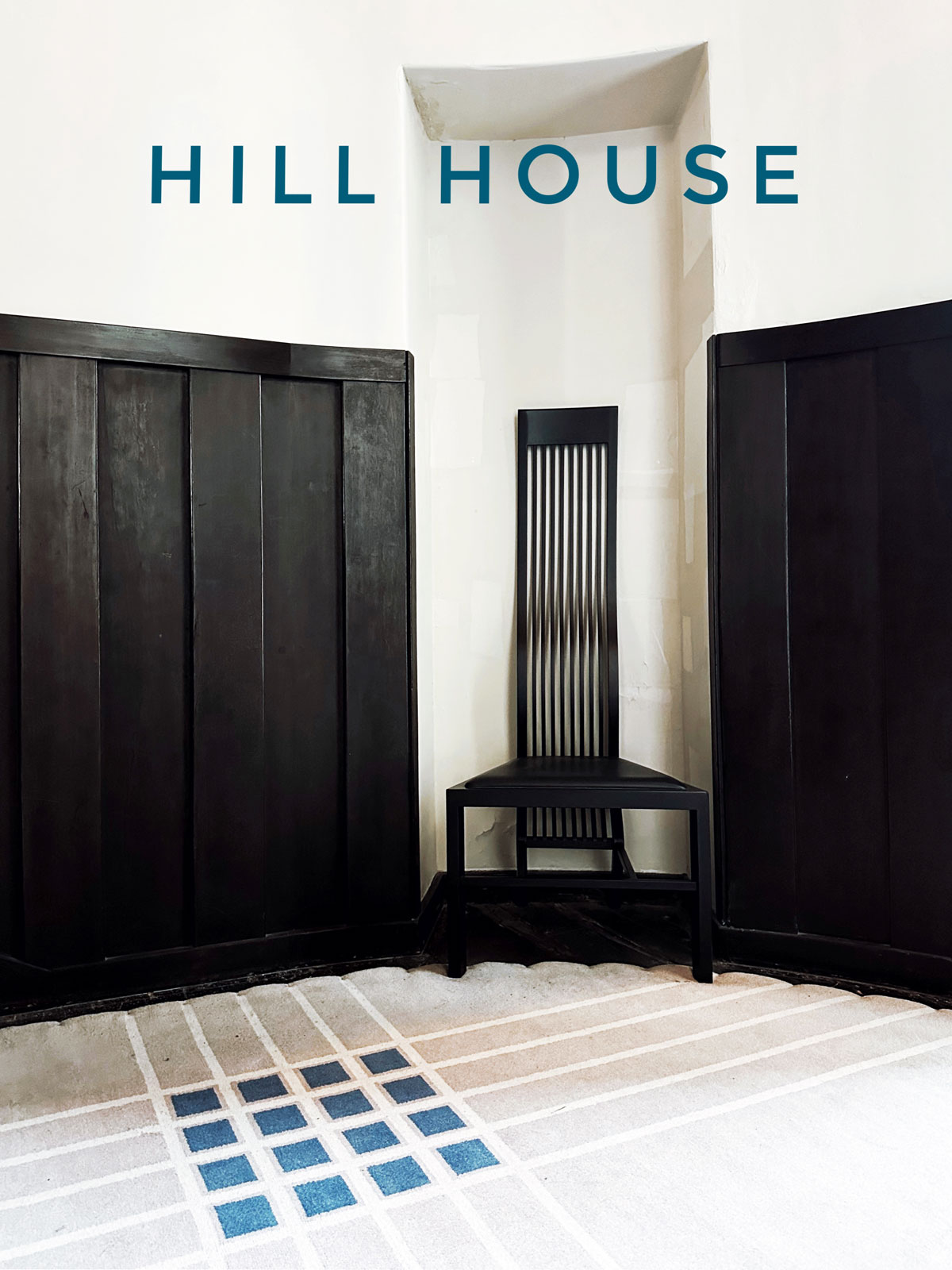
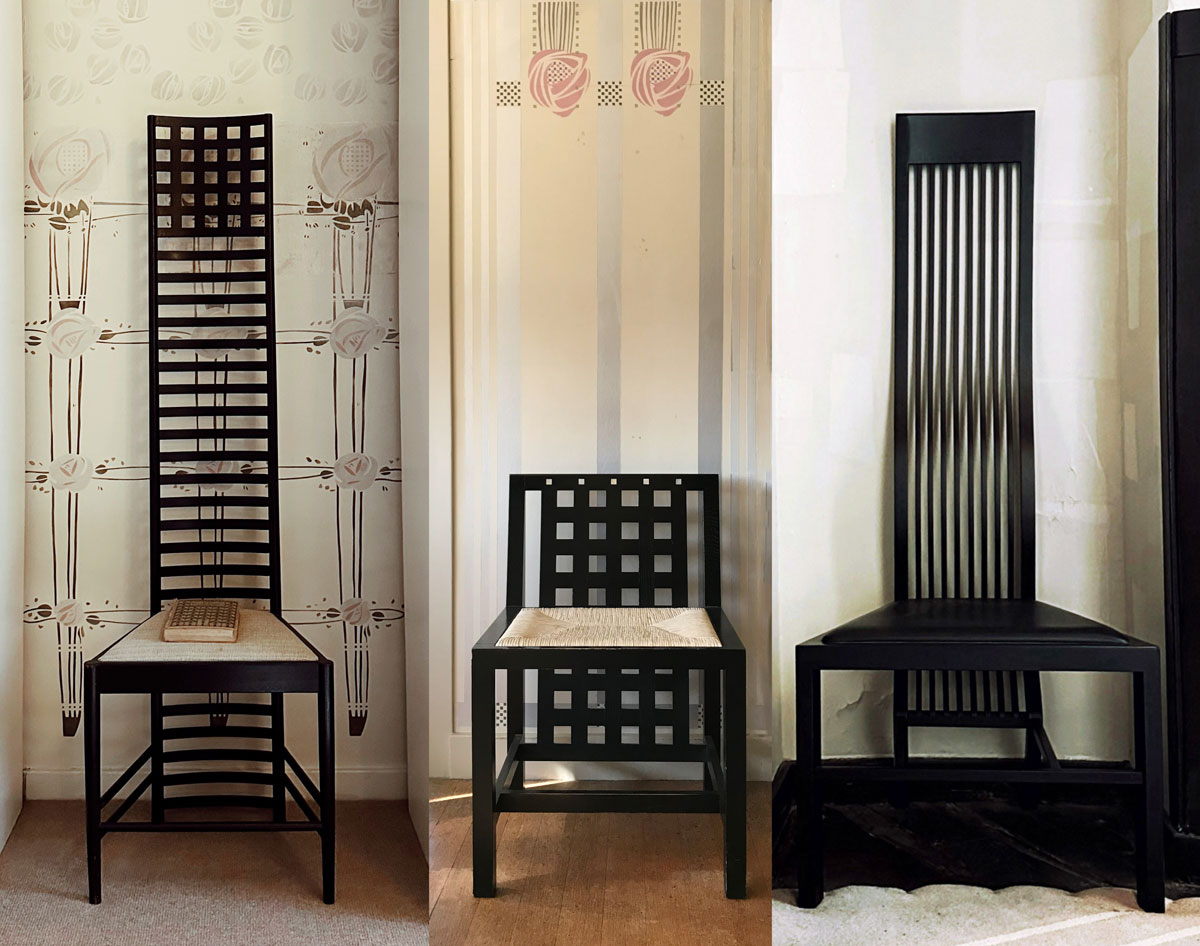
When we think of Charles Rene Mackintosh, we instantly have a vision of one of his iconic ladderback chairs. A beguilingly elegant chair that enjoyed a revival in the early 1970s when Cassina reproduced them along with the Willow Tea Rooms armchair. In fact we associate his ladderback with some of the cool modern interiors of that decade, yet Mackintosh designed this chair and its variations seven decades earlier, way back in 1902 for the Hill House, Helensburgh.
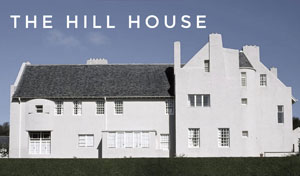
As well designing the house and the interiors, Mackintosh and his wife, Margaret Macdonald Mackintosh, also designed all the fixtures, fittings and of course the furniture. The then current Symbolist movement – of dream states and spiritual realities – played a strong influence on the couple’s thinking, and here and there throughout the house they lent physical form to Symbolist sentiment, such as in Anna Blackie’s bedroom and in Margaret Mackintosh’s living room panel.
In complete contrast, modernity and practical down-to-earth thinking equally played a strong hand, with function predetermining beauty. Yet the juxtaposition of such contradictory elements work seamlessly throughout the house, each beautifully enhancing the other. This is the magic of Mackintosh.
THE LADDERBACK CHAIRS
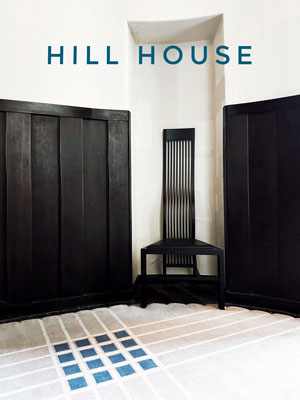
The Hill House boasts two of his most iconic ladderback chairs, designed specifically for the White Bedroom in 1903. Yet they were not for sitting on. They were statement pieces, acting like punctuation in the room’s all-white theme, and their spindle-thin legs and miniature flaring seat emphasise their delicacy and sculptural purpose.
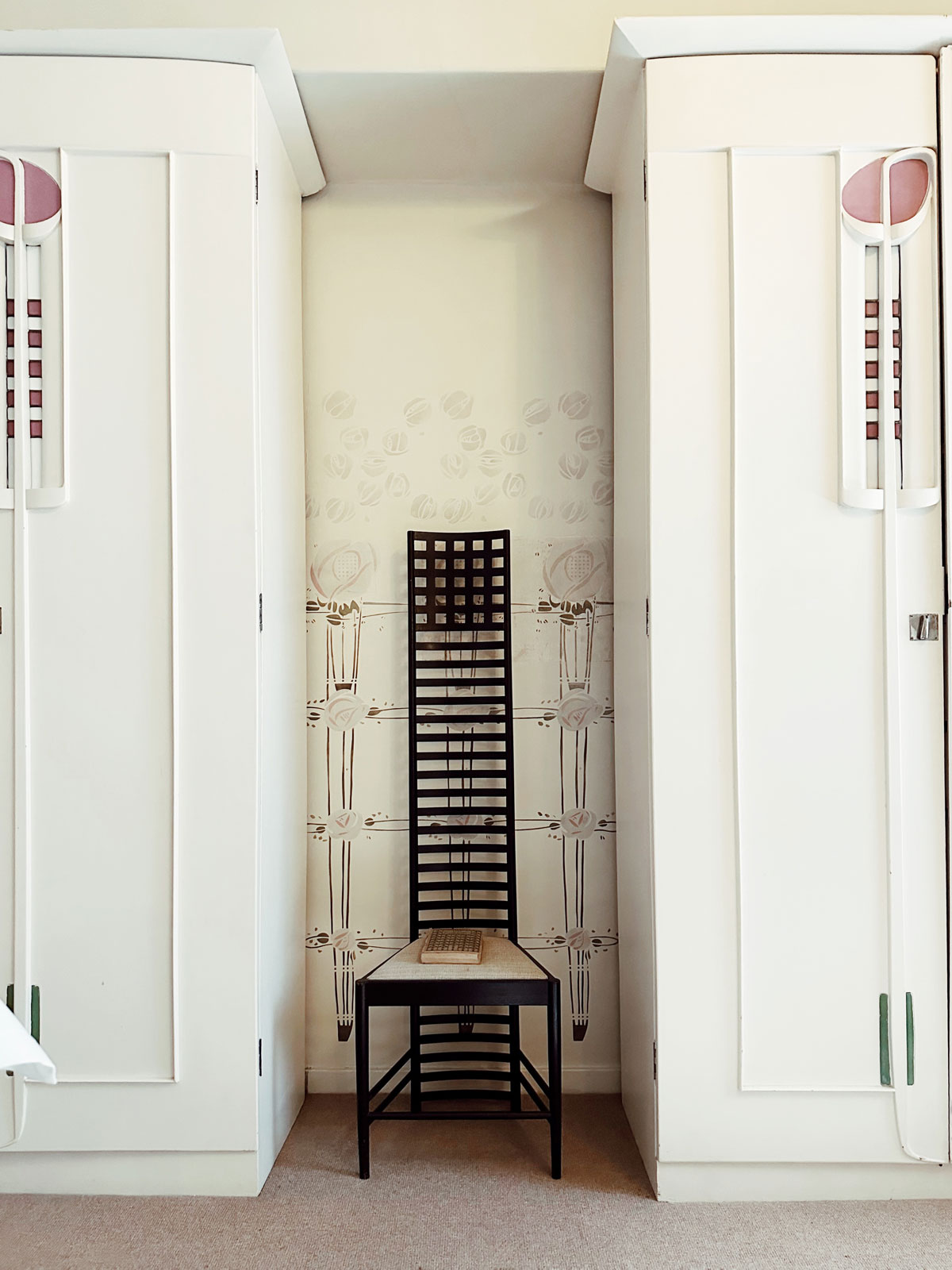
Made from ebonised oak, the tall, laddered back of horizontal bars, along with the classic Mac squared geometric design at the top, are of strong Japanese influence – as are further chairs found throughout the house.
THE WHITE BEDROOM
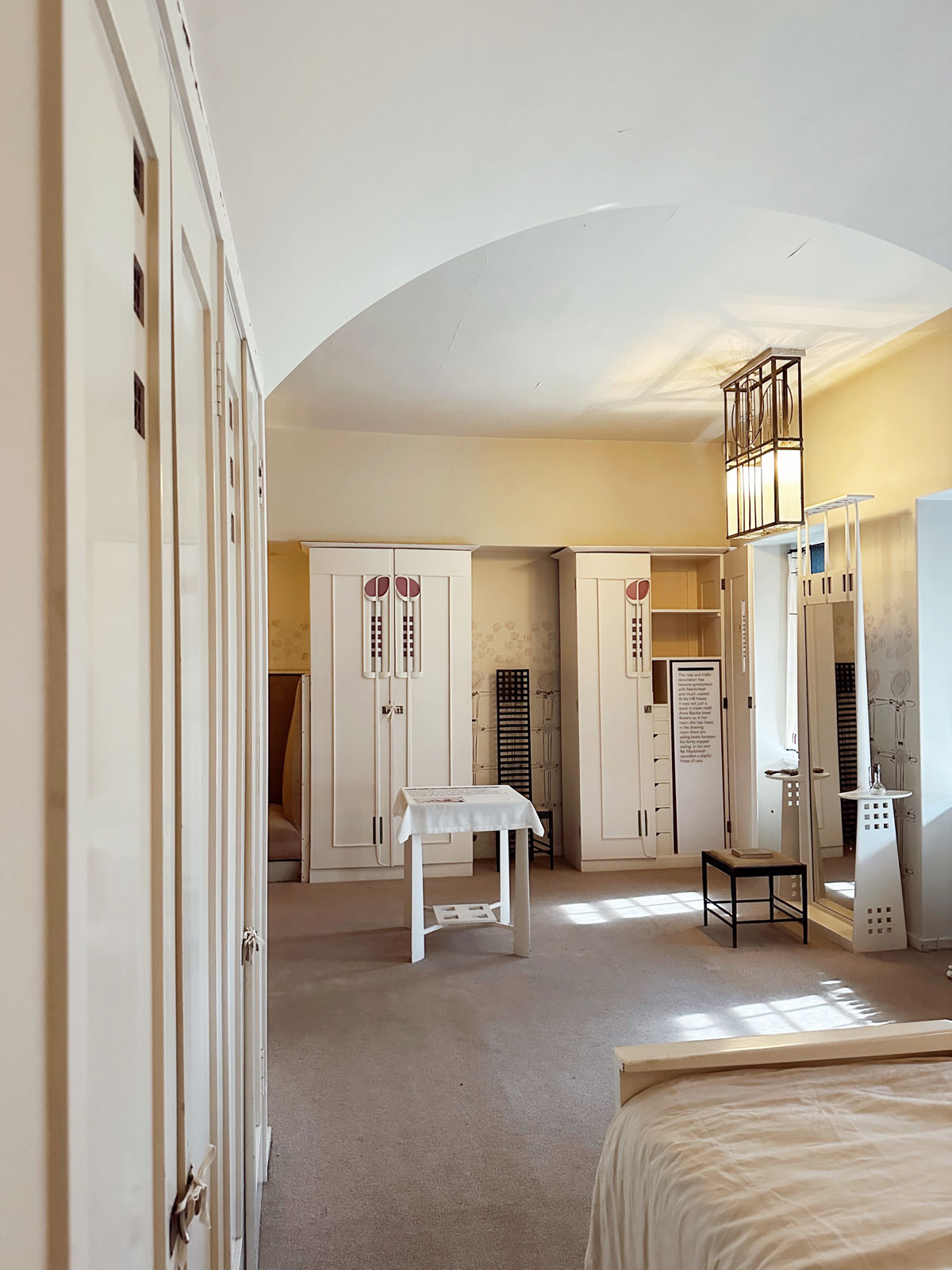
Stepping into the white bedroom, is stepping into a delicious Secessionist dream. Mackintosh and his wife drew on nature for all forms, and the beautiful organic white bedroom furniture with its panels delineated by sensuous climbing stems and stylised roses feels like it has grown out of the room itself. The Mackintoshes had a unique and holistic way of integrating furniture with wall panelling, such as the built-in wardrobes by the bed, and the banquet seating tucked around the corner, which is then also connected to the panelling around the fireplace. Fitted furniture was ground-breaking for 1900, yet it has all the airy prettiness of a Carl Larson illustration, a fellow Arts & Crafts Swedish artist of the time. Free-standing matching furniture such as the cupboards, the table and the statement cheval mirror, add another layer of other-worldly detail to the room, and one feels like Alice in Wonderland – small, mesmerised and in a dream.
For more on the white bedroom see Enter / Hill House 2
THE DESK
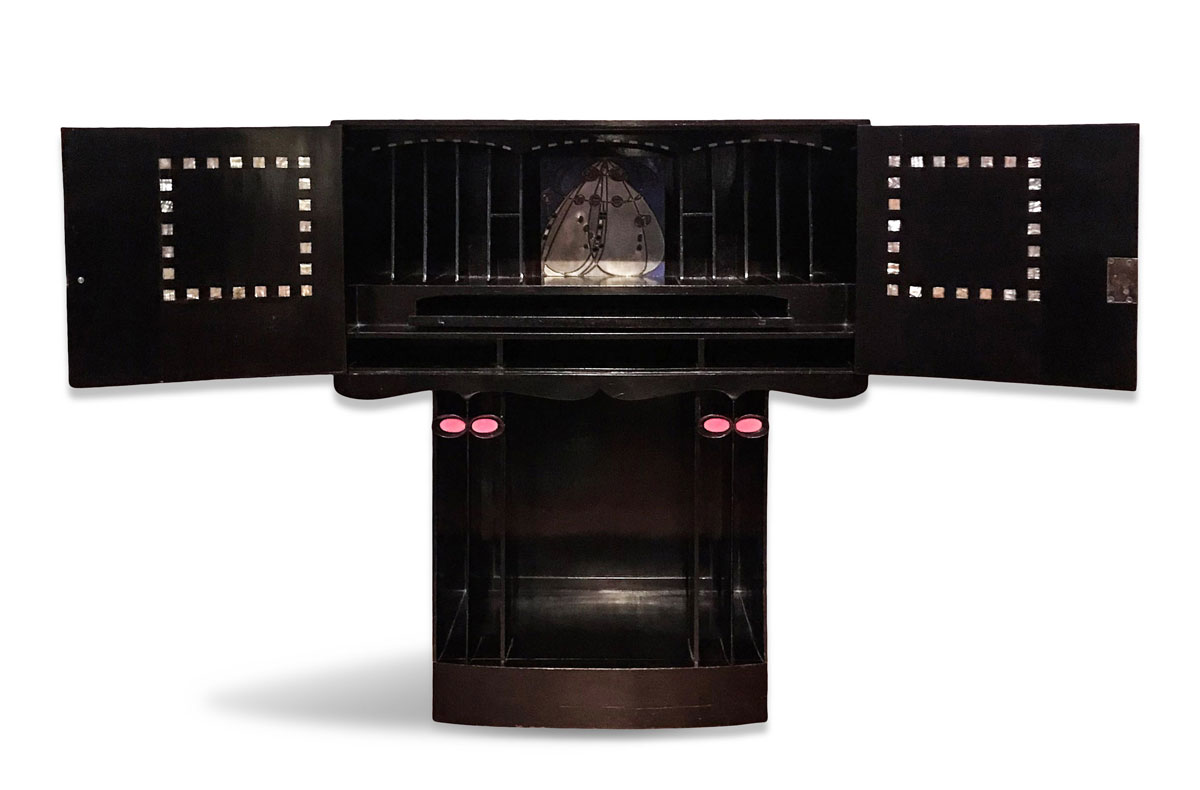
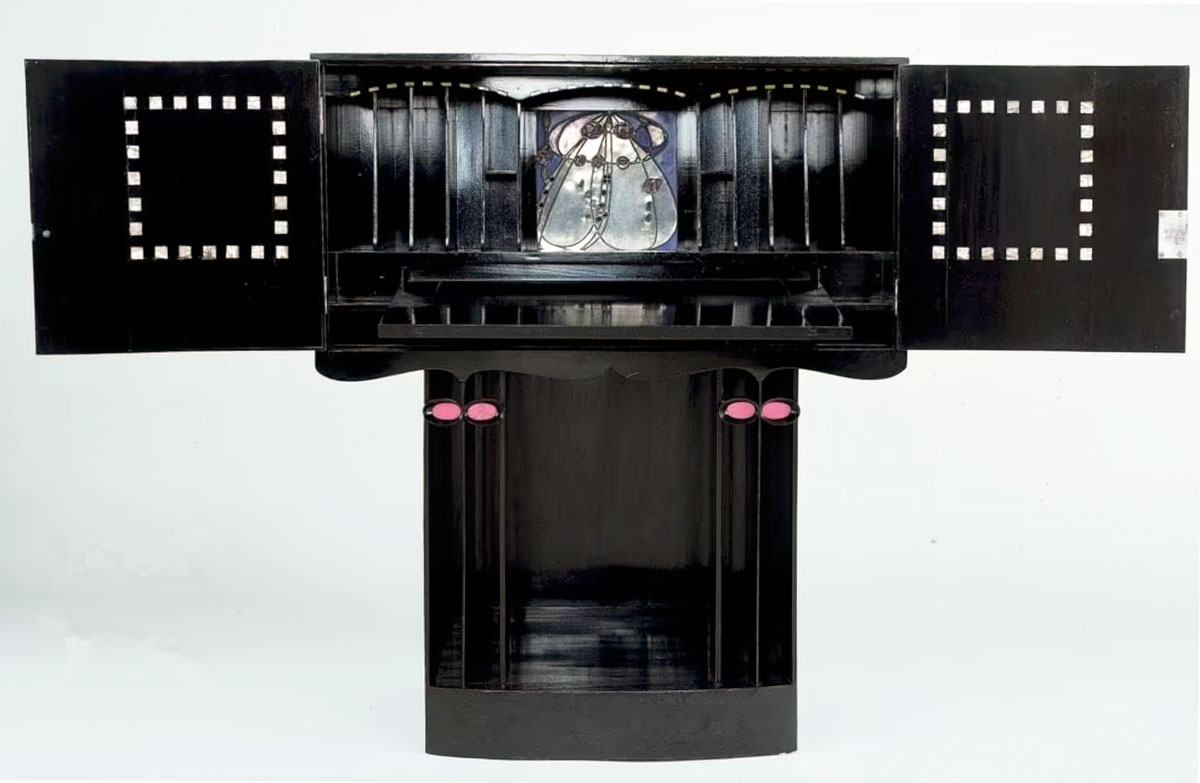
The absolute tops of all of Mackintosh’s furniture designs is this breath-taking secretaire. If anything epitomises Mackintosh’s influence from Japan, then this exquisite desk is it. From its scaled down proportions, ebonised finish, and ivory and mother of pearl inclusions, it resembles a jewel case, or perhaps a Japanese tea ceremony cabinet, and has been dubbed the Kimono desk; as when opened, its T-shape silhouette reminds us of a kimono. Yet it’s classic Mac: the duo husband and wife team working together to produce a desk like no other.
Commissioned by Walter Blackie for the drawing room at Hill House, it was a later edition, arriving in1905. Margaret MacDonald designed the internal leaded glass and metal panel in the centre of the desk with an abstracted figure looped with garlands of roses. It just oozes preciousness and illustrates the Mackintosh’s ability to create something so measured and so blissfully exquisite. It’s the epitome of Secessionist design, a triumph, and is considered to be Mackintosh’s most accomplished piece of furniture design.
Yet how could the descendants of the Blackie family have parted with it? It had to be bought back in 2021 at auction for £996,650.00, that’s why; when it was jointly acquired by Kelvingrove Art Gallery and Museum, Hill House, and National Trust for Scotland. It is now shared between the museum and the Hill House. It’s at the house from April until July and at Kelvingrove for the rest of the year. Yet moving such an important and no doubt fragile piece of furniture twice yearly is surely not ideal.
THE MANTEL CLOCK
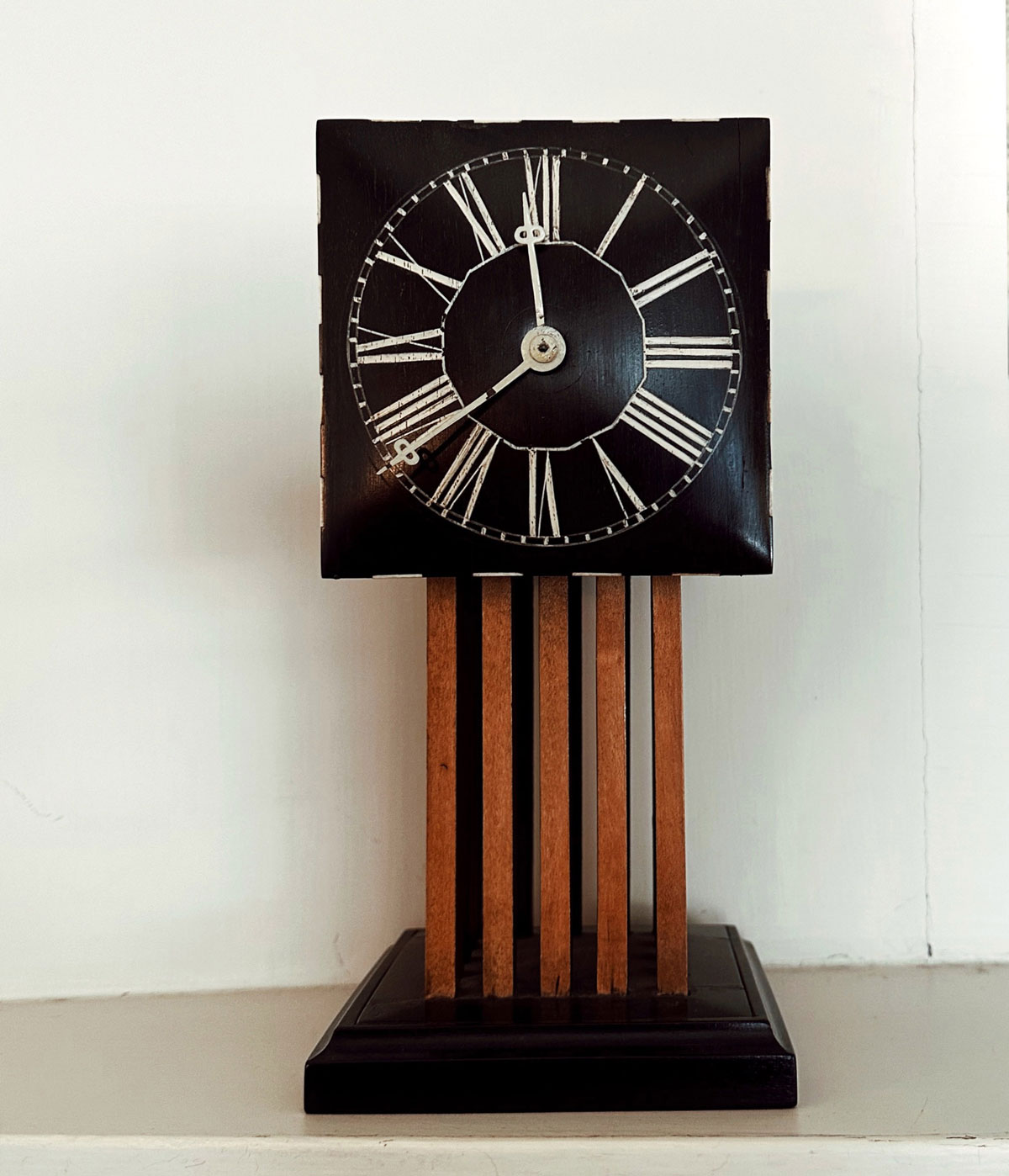
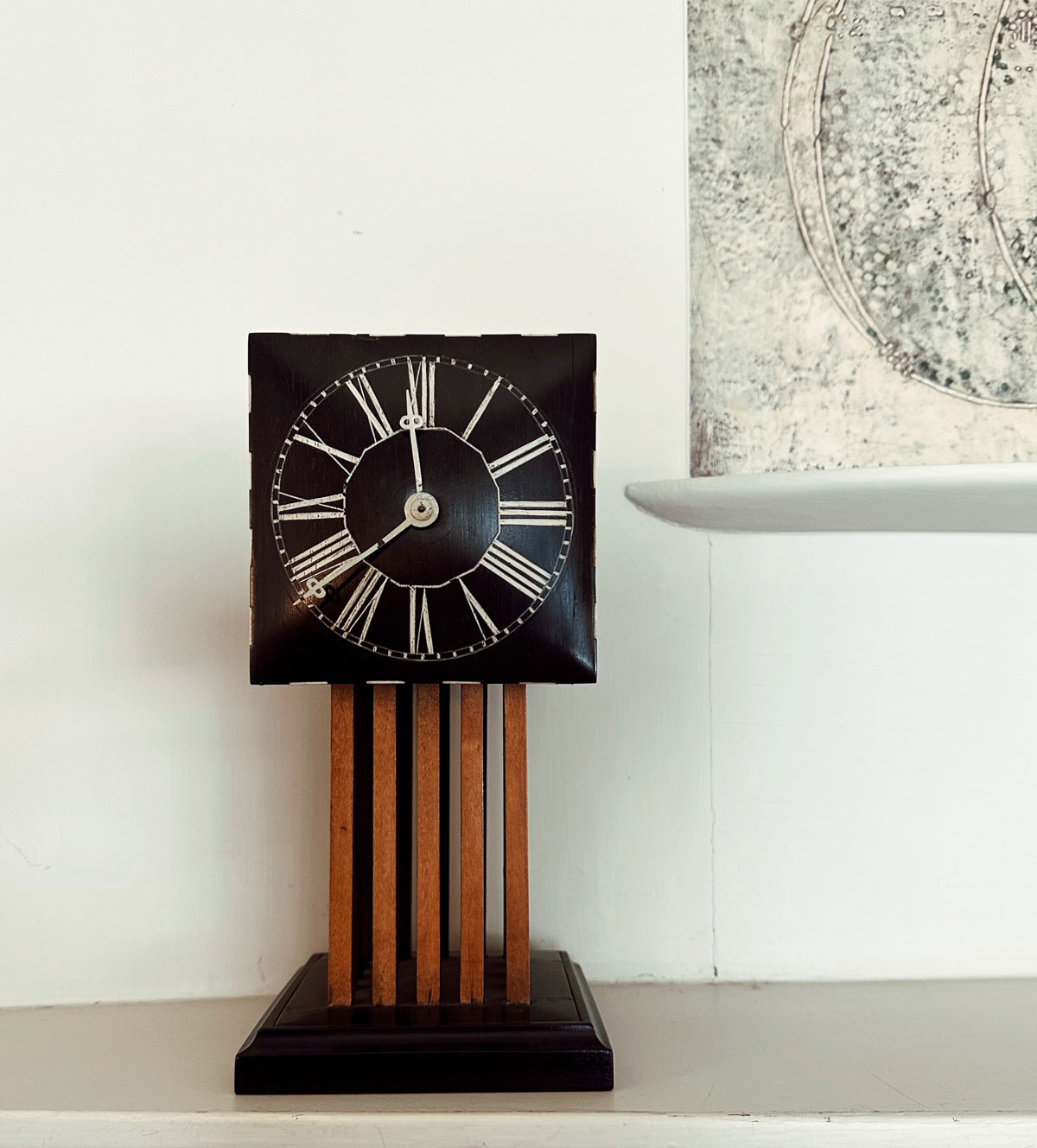
Designed in 1905, Mackintosh had two of these clocks made at the same time, one for Hill House and the other for himself. Made from ebonised wood and sycamore, with ivory inlay and painted Roman numerals, the Hill House clock stands on the living room fireplace mantelpiece. Its boldly graphic design, with its slender columns supporting a square face with gently chamfered edges, mirrors design aspects used in the entrance hall and lobby; and again, is Secessionism at its purist.
THE PANEL
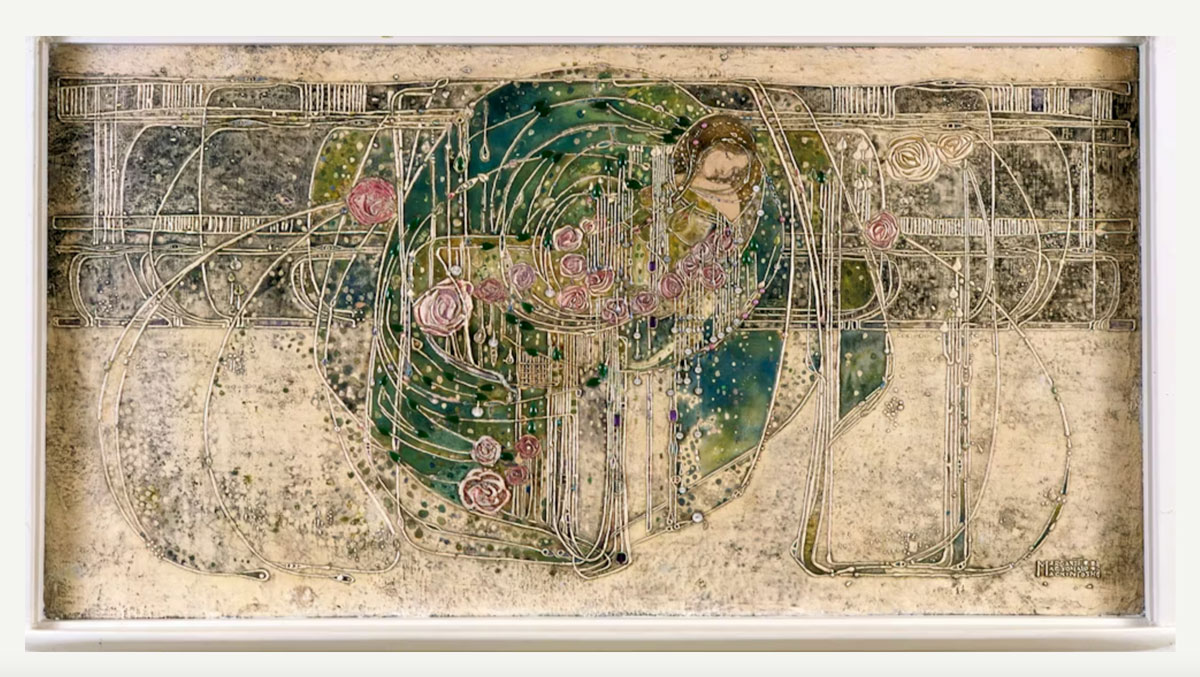
“I have some modest talent, yet Margaret is a genius”, said Mackintosh of his wife. Margaret excelled in the details of Mackintosh interiors, softening the edges of her husband’s more masculine excesses – and was indeed a genius. The Sleeping Beauty gesso panel she designed and created for Hill House is her masterpiece; and it hangs above the living room’s fireplace, being a later addition commissioned by Mrs Blackie in 1908.

Margaret was an expert at frieze design and creation, and her work influenced Kustav Klimt, especially in his creation of The Kiss. Agnes, the youngest of the Blackie children, recalled Margaret working on the Sleeping Beauty panel: ‘I sat and watched her do it. She used a piping bag, like you would if you were icing a cake, and then stuck things onto the plaster. It was very beautiful.’ But it was not as simple as that. Firstly, a traditional gesso recipe had to be created from whiting, plaster of Paris and rabbit skin glue, and then this was slaked for a month. The mixture was piped onto board with its design sketched out, with bits of wire, string and jewels often worked in; and then it was oil painted, dried, sealed with beeswax and burnished. In fact, it took months.
THE TABLE
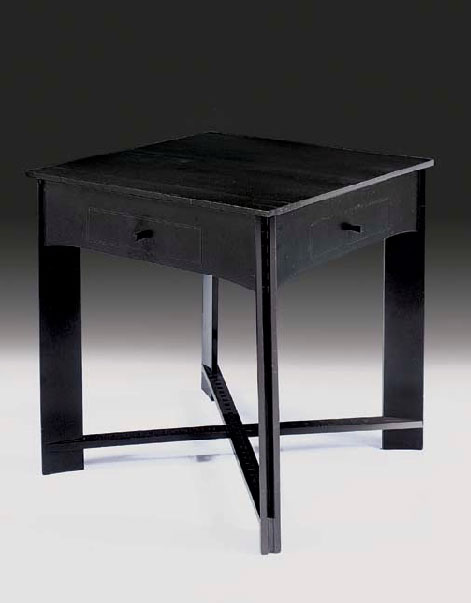
Another fine piece of Mackintosh Hill House furniture that has been on its travels, spending more time away from the house than in it, is this ebonised centre table. Designed in 1905 for the house, it has a square top above an apron set with four drawers. The canted corners are pierced with squares, and its four angled rectangular legs are braced by an X-shaped stretcher, which is also pierced with Mac’s beloved squares.
We’ve done some detective work on this one. Blackie’s grandson sold it in 1967 through Sotheby’s, and it then resided with Any Warhol in New York until his death in 1988. It then went to auction as part of the Warhol Collection, being bought by another private collector, who then sold it through Christies in November 2002 to the National Trust Scotland for £336,650. It now resides in the Hill House living room, back where it was intended.
For more on the Hill House, its rebirth, and today’s recognition of Mackintosh, please do read our further posts by tapping on the icons below. And for the Hill House address and opening times tap here – National Trust For Scotland